
Valuation
Sorting electrical wire and cable before you sell it
Cable is the one item on an electrical list where the removal cost regularly exceeds the material value, and knowing which side of that line a run falls on is the whole skill.
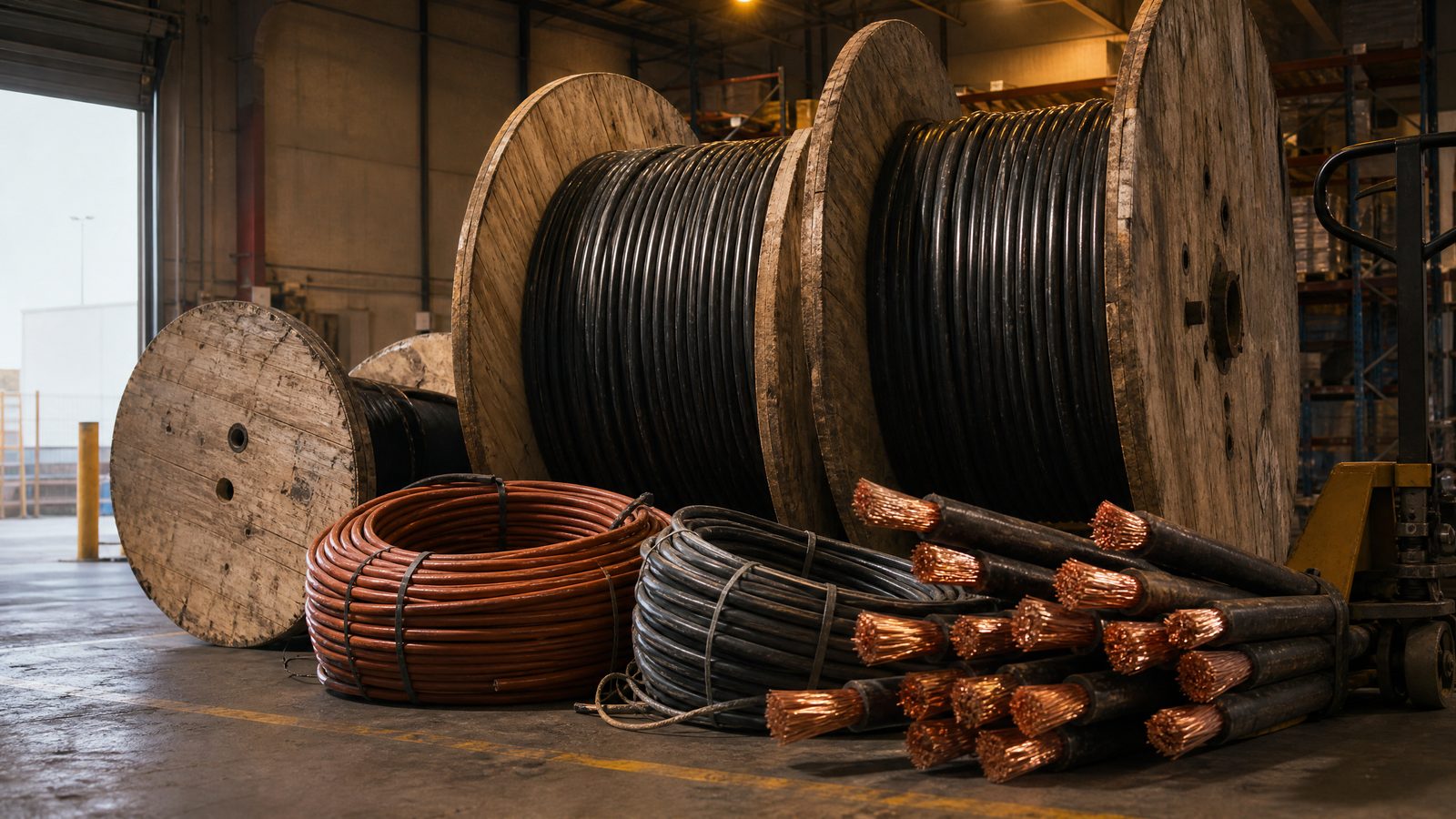
Plate 01
The categories that behave differently
Large copper feeders — 500 kcmil, 750 kcmil and up — are the strongest category, because the copper weight per foot is high and the pull is usually straightforward from a limited number of termination points. Medium-voltage shielded cable adds value when it is a standard construction with usable length remaining, since there is a modest reuse market.
Tray cable and control wire are volume plays: lots of feet, moderate copper content, and labor-intensive recovery. Small branch-circuit wire in conduit is frequently not worth pulling at all unless it is being removed anyway for demolition.
Unused cable still on reels is a different animal entirely. New surplus cable on original reels with legible markings sells into the contractor market at real prices, and it should never be treated as scrap.
Plate 02
Length, gauge and termination count
What a buyer needs is conductor size, insulation type and voltage class, approximate footage, and how many terminations have to be cut. Two hundred feet of 750 kcmil with two terminations is a good job. The same footage split into twelve runs with forty terminations is a labor project.
Reel condition and markings matter on surplus cable. A reel with a legible tag stating type, size and footage sells for more than an identical unmarked reel, because the buyer does not have to discount for uncertainty.
Plate 03
What kills cable value
Fire damage, water immersion, unknown vintage on insulation types that have aged badly, and lead-sheathed or asbestos-jacketed constructions that carry handling requirements. Any of those move cable to recovery value at best, and some to a cost item.
Cable that has been cut into short random lengths also loses value — it becomes pure scrap regardless of what it was, which is one more reason removal method matters.
Plate 04
The honest arithmetic on conduit
Sellers frequently ask about the wire inside hundreds of feet of conduit in a slab or a wall. In most cases the answer is that the recovery cost exceeds the copper value, and the honest thing is to say so rather than to include it in a scope and quietly do a bad job of it.
The exception is when a building is coming down anyway. Then the cable becomes accessible as a byproduct of demolition and the arithmetic reverses, which is why cable recovery should be coordinated with the demolition schedule rather than planned separately.
Questions
Frequently asked
Do you buy wire and cable still installed?
Yes, and we pull it. Whether a specific run is worth pulling depends on conductor size, footage, termination count and access, which we assess before writing the offer.
Is new surplus cable on reels worth more than used?
Substantially. Unused cable on original reels with legible markings sells into the contractor market rather than the recovery market.
What cable is not worth removing?
Small branch-circuit wire in conduit, fire- or water-damaged cable, and short random lengths. We will tell you when recovery cost exceeds material value rather than including it and doing it poorly.
Do you handle medium-voltage cable removal?
Yes, including MV shielded cable, with verified de-energization and grounding before any cutting.
Next
Related field notes
How copper prices set the floor under used electrical equipment
Where the copper actually is in switchgear, transformers, busway and cable, and how commodity markets move offers on equipment that has no resale value.
MarketsBusway and bus plugs — the most underestimated line on the list
Why bus plugs sell faster than the busway they came from, how run length and amperage affect value, and what to photograph before a busway removal.
ValuationHow to scope the electrical side of a plant shutdown
Sequencing, temporary power, what to sell versus scrap, and the documentation that keeps a decommissioning from stalling.
ProjectsForm 1 — Request for Offer
Get a Written Offer
Send the asset list, or just describe what is in the room. We come back the same business day with a written, itemized offer.
Faster: call or text 954-740-1983
Email an asset list to electricalequipmentbuyers@gmail.com
Mon–Sat, 7am–7pm ET. We never resell your contact information.