
Valuation
Busway and bus plugs — the most underestimated line on the list
Busway is priced by the foot and by the fitting; bus plugs are priced by the catalog number, and the catalog number is where the money is.
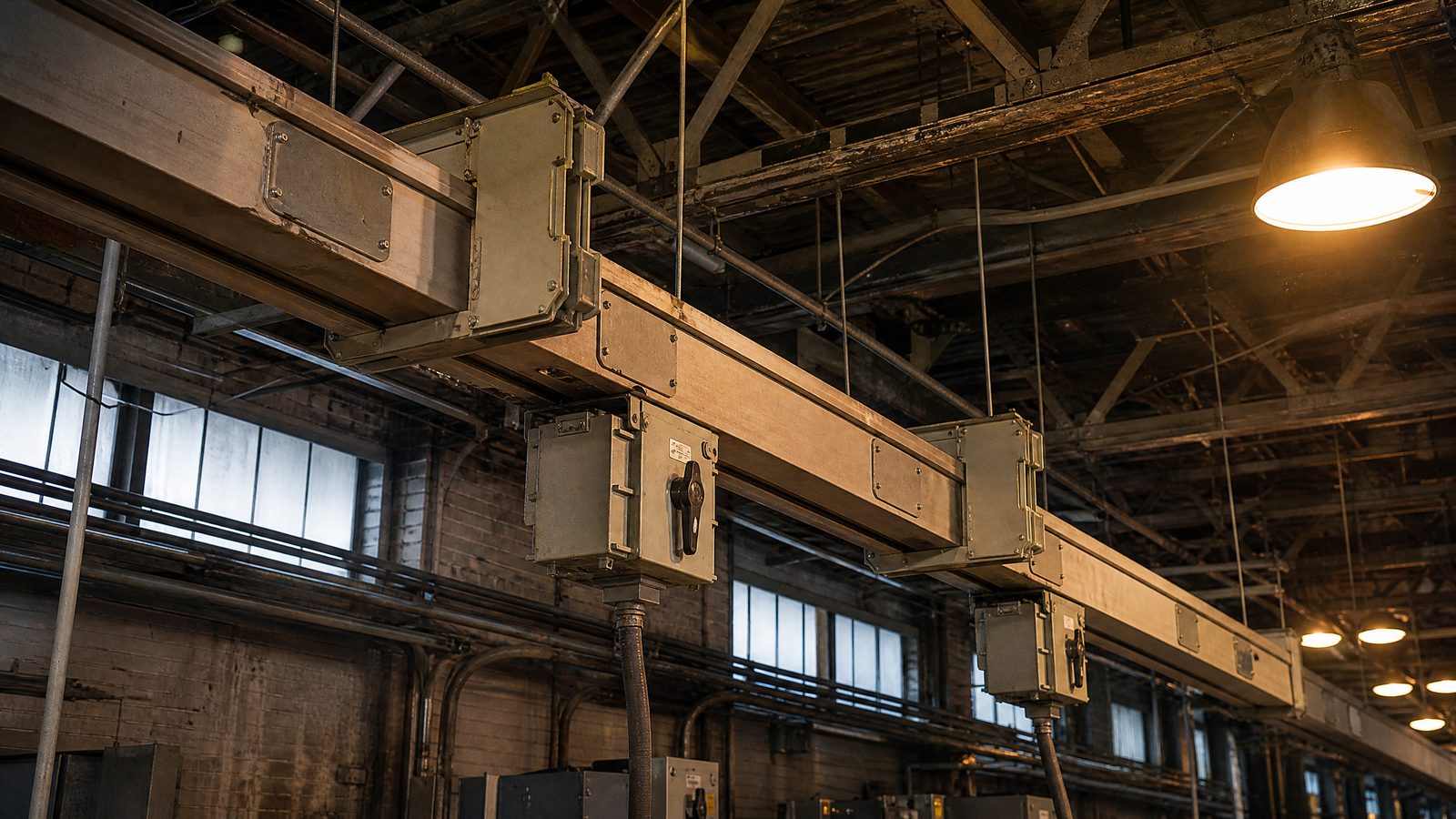
Plate 01
Two products in one system
A busway installation is really two markets. The straight lengths, elbows, tees and end closures make up the run itself, which is valued on amperage, conductor material and how much of the run comes out in reusable pieces. The bus plugs — the fusible and breaker-equipped tap boxes hanging off it — are separately cataloged devices with their own aftermarket.
Plugs almost always move faster. They are small enough to ship cheaply, they fail and get replaced in live plants, and they are specific to a manufacturer's busway family, so a plant with that family installed has nowhere else to go.
Plate 02
What sets the value of the run
Copper busway is worth considerably more than aluminum, and the difference is large enough that identifying conductor material is the first question on any busway inquiry. Amperage matters: 800 A through 4000 A copper runs have the deepest demand.
Then there is the practical question of how much comes out intact. Busway is bolted section to section, and a careful teardown yields reusable lengths and fittings. A rushed teardown yields bent, twisted scrap. This is one of the clearest cases where who removes the equipment directly determines what it is worth.
Plate 03
Plugs: photograph every label
Each plug has a catalog number, an amperage, and either fuses or a breaker inside. Photograph the label on every plug — not a representative sample. Mixed runs are normal, and a single 600 A breaker plug in a row of 100 A fusible plugs can carry a disproportionate share of the value.
Note whether plugs are fusible or breaker type, and whether the breakers are still inside. Empty plug housings are worth a fraction of complete units.
Plate 04
Removal is the hard part
Busway is overhead, heavy, and usually runs through the busiest part of a plant. Removal means scaffolding or lifts, working over production equipment, and supporting sections as they are unbolted. It is skilled work and it is where most of the removal budget on a busway scope goes.
When we price a busway run we price the teardown method along with it, because taking a run down carefully enough to resell it costs more than cutting it down — and is usually still the higher net number for the seller.
Questions
Frequently asked
Do you buy bus plugs separately from the busway?
Yes, and frequently that is the better transaction for a seller. Plugs have their own aftermarket and ship cheaply, so a pallet of plugs can be sold even when the run itself stays in place.
Is copper or aluminum busway more valuable?
Copper, by a wide margin. Identifying conductor material is the first thing we establish on any busway inquiry because it changes the number substantially.
Can busway be reused after removal?
Yes, when it is taken down section by section rather than cut. Careful teardown preserves the joint hardware and housing alignment that reuse depends on, which is why removal method affects value so directly.
What should I photograph on a busway run?
The label on every plug, the busway nameplate or housing label, wide shots showing the full run and its height, and the elbows, tees and risers. Also photograph the access conditions beneath the run.
Next
Related field notes
Why the storage shelf beats the switchgear on a value-per-pound basis
Breakers, bus plugs, MCC buckets, relays and trip units in a spares room are frequently the highest-value items in a closure. How to inventory them before they are scrapped.
ProjectsWhat happens on site, hour by hour
From lockout coordination to the last sweep: the real sequence of an industrial electrical equipment removal, and where schedules usually slip.
ProcessHow copper prices set the floor under used electrical equipment
Where the copper actually is in switchgear, transformers, busway and cable, and how commodity markets move offers on equipment that has no resale value.
MarketsForm 1 — Request for Offer
Get a Written Offer
Send the asset list, or just describe what is in the room. We come back the same business day with a written, itemized offer.
Faster: call or text 954-740-1983
Email an asset list to electricalequipmentbuyers@gmail.com
Mon–Sat, 7am–7pm ET. We never resell your contact information.