
Process
What happens on site, hour by hour
A removal that goes well looks boring from the outside. That is the objective.
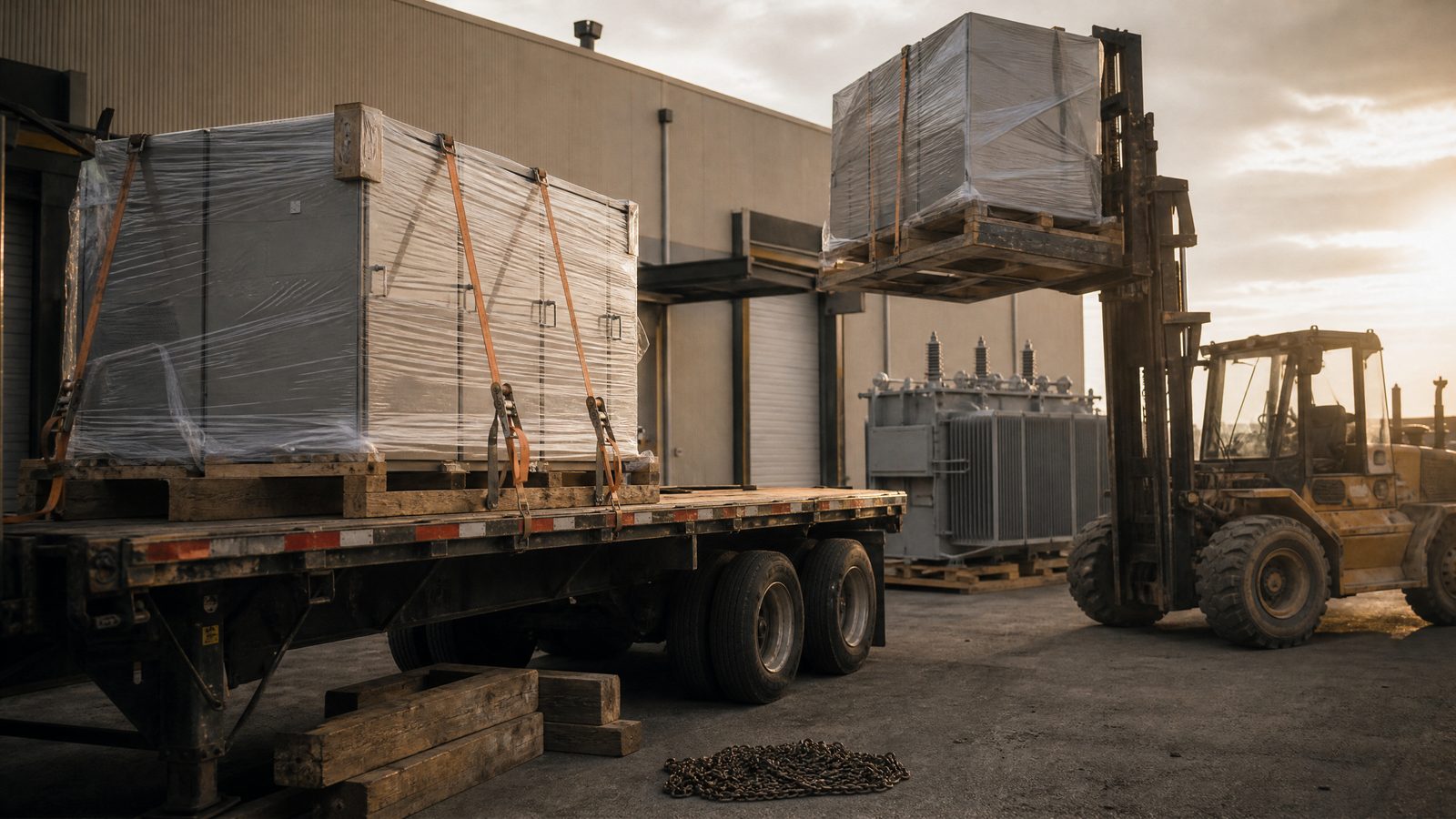
Plate 01
Before anyone arrives
The paperwork comes first: the purchase agreement, our certificate of insurance naming your entity, the site-specific safety documentation your facility requires, and a written removal scope stating what is being taken and what is being left.
Then the isolation plan. Somebody with authority over the electrical system has to confirm what is de-energized, how it is locked out, and who holds the locks. On live plants this is the step that sets the schedule, because it usually has to happen during a window that does not interrupt production.
Plate 02
Day one: verification and teardown
A crew arrives, walks the scope against the written list, verifies de-energization with instruments regardless of what the tags say, and establishes the work area and the travel path. Anything that does not match the written scope gets raised before tools come out, not after.
Teardown then proceeds in the reverse order of installation. Cable terminations are freed, breakers are racked out and crated separately, and line-ups are unbolted into shippable sections. Equipment that is being resold is protected during this stage — sections are covered, hardware is bagged and labeled, and drawout units are secured.
Plate 03
Rigging and load-out
Sections move on skates, pallet jacks, forklifts or cranes depending on weight and geometry. The path documented during the survey is the path used, and the constraints identified there — door frames, floor loading, overhead clearances — are respected rather than discovered.
Trucks are loaded, blocked and braced, and paperwork is signed at the dock. On liquid-filled transformer removals the fluid documentation is completed here as well.
Plate 04
Where schedules actually slip
Almost never during rigging. Delays come from three places: an isolation window that moves, a scope that turns out to include equipment still feeding something in service, and site access requirements — badging, escorts, hot-work permits — that were communicated late.
All three are solved with information rather than labor. The more completely a site's access rules and system conditions are stated before mobilization, the more likely a removal finishes on the day it was scheduled to finish.
Questions
Frequently asked
Who disconnects the equipment?
We do, coordinated with whoever holds authority over your electrical system. De-energization is verified with instruments on site before any teardown begins.
Does removal cost extra, or is it included?
It is included. We buy the equipment and perform the removal under one agreement, with one insurance certificate. The removal cost is already reflected in the offer.
How long does a typical removal take?
A single transformer or a small line-up is usually one day. A full plant electrical scope runs from several days to several weeks, sequenced around your operations.
When do I get paid?
Before the equipment leaves your dock. That is the standard arrangement on every purchase we write.
Next
Related field notes
The photographs that turn an inquiry into a number
Buyers price equipment from nameplates and site context. Here are the exact photographs to take, what has to be legible, and the shots sellers almost always forget.
ProcessHow to scope the electrical side of a plant shutdown
Sequencing, temporary power, what to sell versus scrap, and the documentation that keeps a decommissioning from stalling.
ProjectsThe questions that separate a real buyer from a broker with a phone
Certificates of insurance, additional insured status, crew employment, safety programs and site access. What to verify before anyone works in your building.
ProcessForm 1 — Request for Offer
Get a Written Offer
Send the asset list, or just describe what is in the room. We come back the same business day with a written, itemized offer.
Faster: call or text 954-740-1983
Email an asset list to electricalequipmentbuyers@gmail.com
Mon–Sat, 7am–7pm ET. We never resell your contact information.