
Valuation
What buyers look for in 5 kV and 15 kV equipment
Medium-voltage equipment inverts the usual logic: fewer possible buyers, but each one is far more motivated.
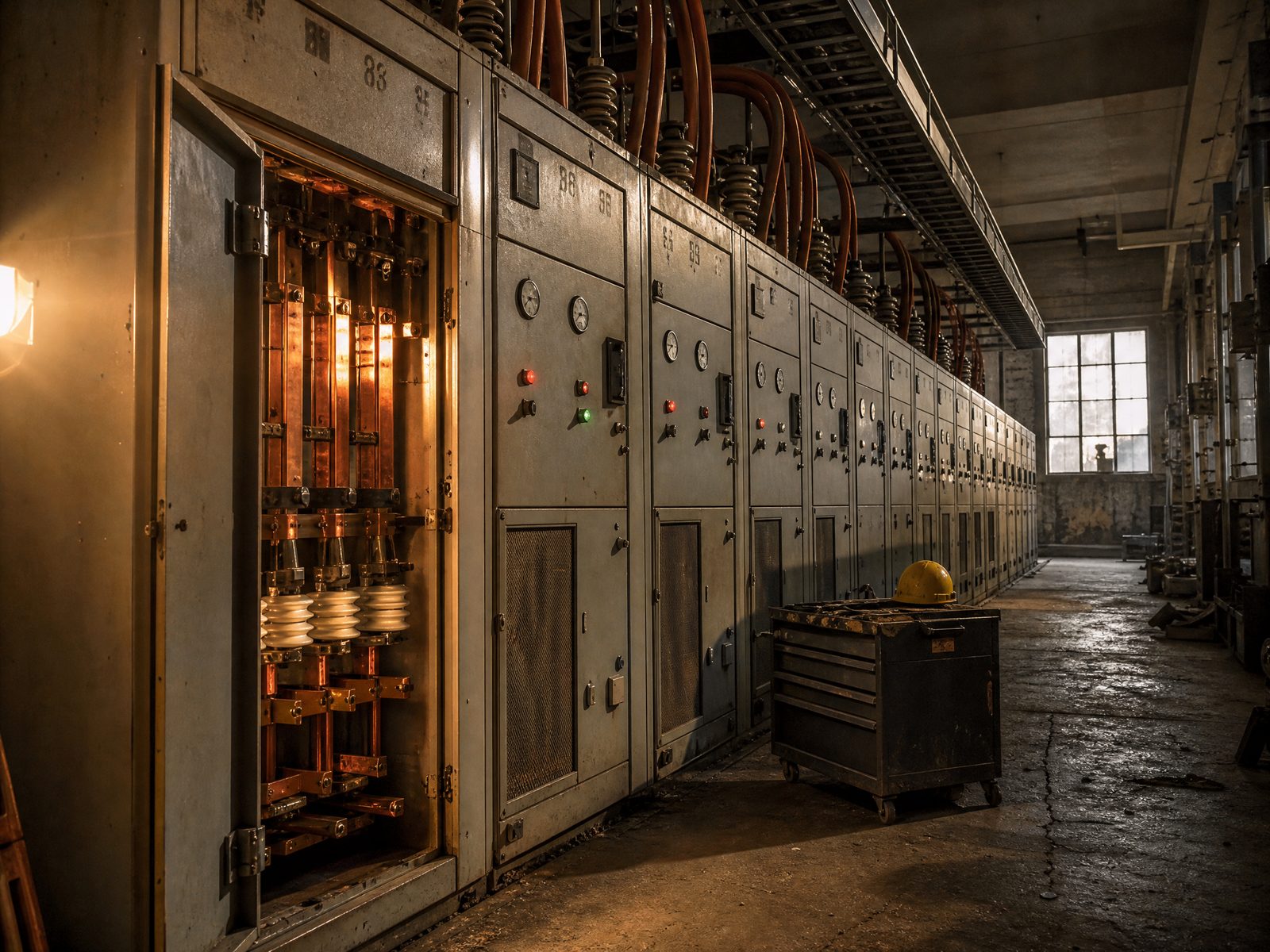
Plate 01
Why the market is thin and firm
Only utilities, large industrials, mines, hospitals with campus distribution and a handful of contractors and dealers operate at 5 kV and 15 kV. So on any given month the number of active buyers for a specific metal-clad line-up is small.
But those buyers have projects with schedules and lead times measured in many months for new equipment. When a used line-up matches their requirement, it is worth a great deal to them. Thin market, firm prices, longer time to sell.
Plate 02
What has to match
Voltage class and BIL, continuous and momentary current ratings, interrupting capacity, breaker type and frame, bus configuration, and physical arrangement — indoor or outdoor, front or front-and-rear access, cable entry from above or below.
Because so much has to align, the specification detail a seller provides matters more here than anywhere else. Vague information on MV gear does not produce a conservative offer; it produces no offer, because a buyer cannot evaluate fit.
Plate 03
Testing is effectively mandatory
Nobody energizes used medium-voltage equipment without test results. Contact resistance, insulation resistance, hi-pot or partial discharge where appropriate, breaker timing, and relay calibration. A current NETA report on an MV line-up is worth real money on the offer.
If no test history exists, testing before sale is frequently justified on MV equipment in a way that it is not on low-voltage gear, simply because the values are larger.
Plate 04
Removal is a different kind of job
Medium-voltage removals involve heavier sections, cable terminations that take longer to free, mandatory grounding practice, and frequently utility coordination. Crews and equipment are more specialized and the schedule is longer.
All of that is subtracted from the equipment value, which is why MV offers should always state the removal scope explicitly. A large number with an undefined scope is not a better deal than a smaller number with a defined one.
Questions
Frequently asked
Do you buy medium-voltage switchgear?
Yes, including 5 kV and 15 kV metal-clad and metal-enclosed gear, vacuum and oil breakers, and medium-voltage motor control.
Why does medium-voltage equipment take longer to sell?
The buyer pool is small and fit requirements are strict. When a match exists the value is high, but matching takes longer than in the low-voltage market.
Is testing required to sell MV equipment?
Practically, yes. Buyers will not energize used medium-voltage gear without test results, so test reports significantly affect both salability and price.
What details do you need on an MV line-up?
Voltage class and BIL, current and interrupting ratings, breaker type and frame, bus arrangement, indoor or outdoor construction, and cable entry configuration.
Next
Related field notes
What used switchgear is actually worth
How a used-switchgear buyer builds a number: resale value versus copper content, which nameplates matter, and the removal costs that get subtracted before you see an offer.
ValuationTaking a substation out of service and out of the ground
How substation decommissioning is sequenced, what carries recovery value, and the utility coordination that has to happen before a crew mobilizes.
ProjectsHow test reports change what used equipment is worth
Insulation resistance, contact resistance, DGA, breaker timing and thermographic surveys — which reports matter to buyers and when testing before sale pays for itself.
ProcessForm 1 — Request for Offer
Get a Written Offer
Send the asset list, or just describe what is in the room. We come back the same business day with a written, itemized offer.
Faster: call or text 954-740-1983
Email an asset list to electricalequipmentbuyers@gmail.com
Mon–Sat, 7am–7pm ET. We never resell your contact information.