
Valuation
Why obsolete circuit breakers can be the most valuable items in the room
A shelf of dusty drawout breakers is often the single most valuable line on a plant electrical list, and it is the line sellers most often scrap by accident.
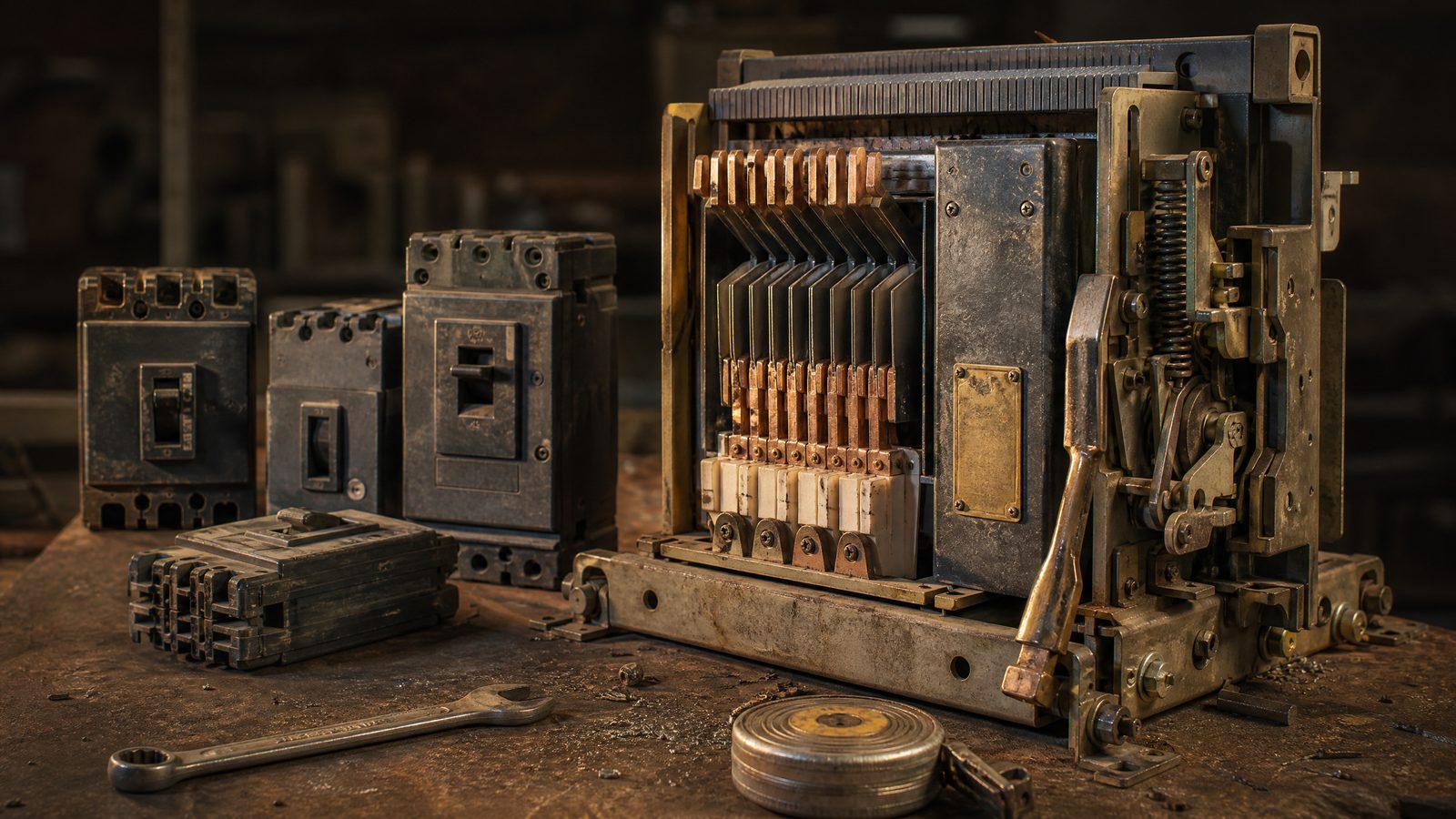
Plate 01
The aftermarket exists because installations outlive production
Switchgear stays in service for forty or fifty years. Breaker production lines are discontinued in twenty. That gap creates a permanent aftermarket: thousands of live installations need replacement breakers for frames the factory no longer builds, and the only supply is equipment coming out of other buildings.
This is why a breaker from a discontinued line can be worth multiples of a comparable current-production unit. Scarcity in a market with mandatory demand — a plant with a failed main cannot simply choose to wait — produces prices that surprise sellers.
Plate 02
Drawout, insulated-case, molded-case
Low-voltage drawout power breakers are the strongest category. They are designed to be removed and reinstalled, they carry frame and trip ratings that make them interchangeable within a family, and the aftermarket for them is deep.
Insulated-case breakers also hold value, though matching is fussier. Molded-case breakers are the weakest category, because new ones are cheap and plentiful — with the exception of large frames and discontinued specialty units, where the same scarcity logic applies.
Medium-voltage vacuum breakers sit in their own market: fewer buyers, higher unit values, and a strong preference for units with documented contact wear and timing tests.
Plate 03
What raises a breaker offer
Legible catalog and frame numbers, matching trip units and rating plugs, complete secondary wiring and control accessories, present and undamaged arc chutes, and a recent test report. Breakers that arrive with their cell-mounting hardware and racking mechanism are worth more than bare frames.
The reverse also holds. Missing trip units, cannibalized accessories, cracked insulation and evidence of a fault interruption without subsequent testing all push a breaker toward recovery value.
Plate 04
Do not scrap the shelf
The most expensive mistake we see on decommissioning projects is a spare-parts room going into a scrap container because nobody recognized what was on the shelves. Breakers, bus plugs, relays and trip units in a storage room routinely carry more value per pound than anything bolted to the wall.
Before any container arrives, photograph the shelves. It takes ten minutes and it is frequently the highest-return ten minutes of the entire project.
Questions
Frequently asked
Are old circuit breakers worth money?
Often substantially so. Discontinued drawout frames serve a mandatory replacement market for installations still in service, so scarcity can push values well above current-production equivalents.
Do you buy breakers individually or only whole line-ups?
Both. We buy single breakers, pallets of spares, complete line-ups and whole plant electrical lots. Spare-parts rooms are frequently the highest-value portion of a scope.
What documentation helps on breaker sales?
Catalog and frame numbers, trip unit and rating plug details, and any timing, contact-resistance or primary injection test reports. Tested breakers sell as verified rather than as-is.
Do you buy breakers that have interrupted a fault?
Yes, though they are priced conservatively unless post-fault testing exists. Disclose the fault history — it affects how the unit can be resold and therefore what it is worth.
Next
Related field notes
What used switchgear is actually worth
How a used-switchgear buyer builds a number: resale value versus copper content, which nameplates matter, and the removal costs that get subtracted before you see an offer.
ValuationWhy the storage shelf beats the switchgear on a value-per-pound basis
Breakers, bus plugs, MCC buckets, relays and trip units in a spares room are frequently the highest-value items in a closure. How to inventory them before they are scrapped.
ProjectsWhat buyers look for in 5 kV and 15 kV equipment
Metal-clad switchgear, vacuum breakers and MV motor control: why the buyer pool is small, why values are high, and what documentation is effectively required.
ValuationForm 1 — Request for Offer
Get a Written Offer
Send the asset list, or just describe what is in the room. We come back the same business day with a written, itemized offer.
Faster: call or text 954-740-1983
Email an asset list to electricalequipmentbuyers@gmail.com
Mon–Sat, 7am–7pm ET. We never resell your contact information.