
Compliance
Transformer oil and PCB documentation, explained plainly
On a liquid-filled transformer, the oil is not a detail. It determines who can legally handle the unit, how it ships, and what documentation should end up in your file when it leaves.
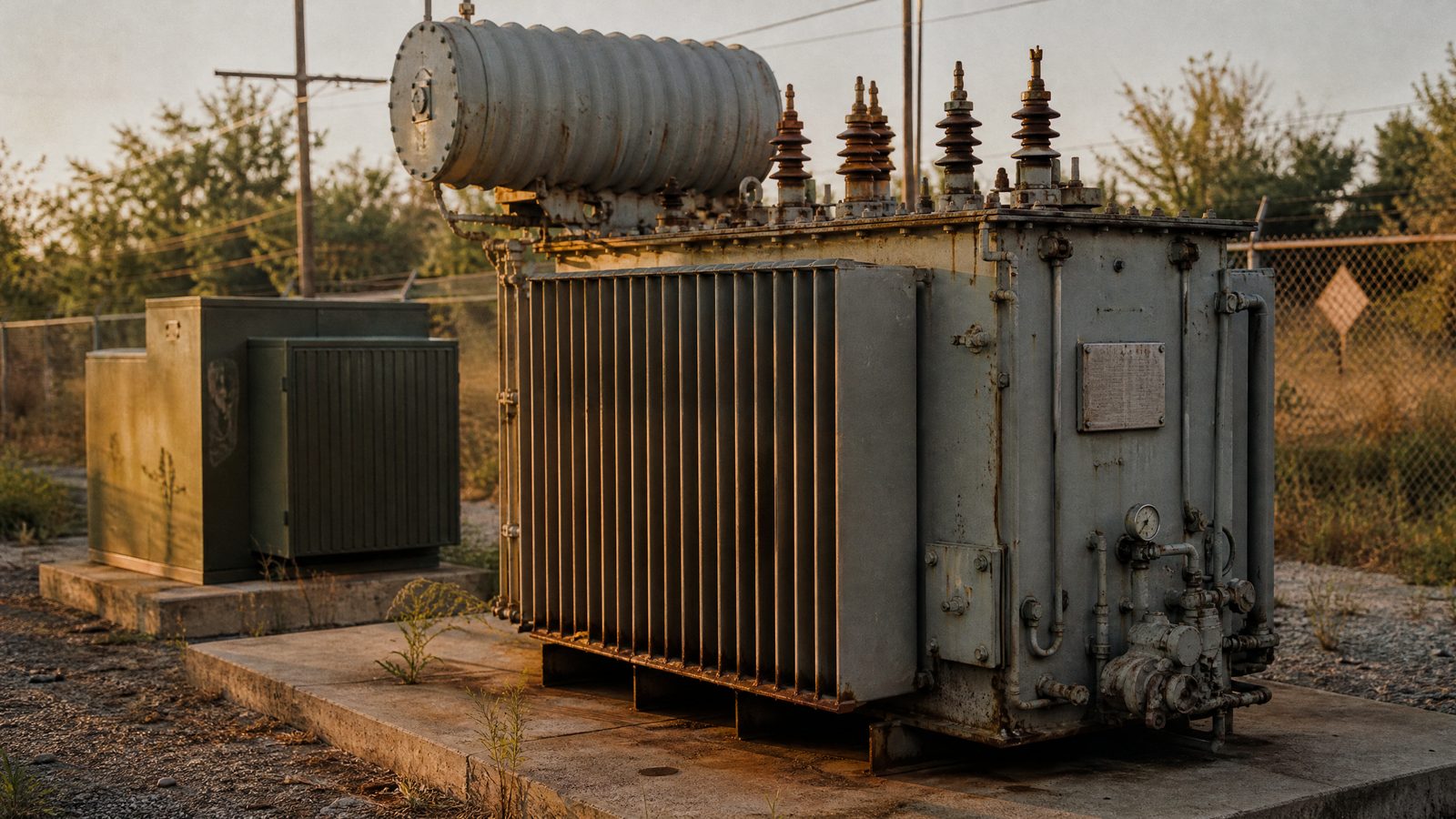
Plate 01
The three classifications that matter
Federal PCB rules sort transformer dielectric fluid into three practical buckets. Below 50 parts per million the unit is non-PCB. From 50 to 499 ppm it is PCB-contaminated. At 500 ppm and above it is a PCB transformer, with the most restrictive handling and disposal requirements.
Those thresholds are not judgment calls; they come from a lab result on a fluid sample. What a buyer needs to know before mobilizing is which bucket a unit is likely in, because it changes the transport, the vendor chain and the cost of the removal.
Plate 02
Vintage is the first indicator, not the answer
Askarel and PCB-containing fluids were used widely through the 1970s. Manufacture after the phase-out is a good sign but not proof, because units were topped off and reworked with mixed fluids for years afterward. Nameplates sometimes name the fluid directly, and a fluid trade name printed on the plate is the fastest clue you can hand a buyer.
For any liquid-filled unit of uncertain vintage the correct answer is a fluid sample and a lab result. It is inexpensive relative to the equipment value, and it converts an unpriceable risk into a known cost. We routinely arrange sampling as part of the purchase when a seller has no history on a unit.
Plate 03
What good documentation looks like
When a liquid-filled transformer leaves your site, your file should contain the lab analysis, the bill of lading or shipping paperwork, and where applicable the disposal or recycling documentation identifying the downstream facility. If oil was drained on site, the manifest for that fluid belongs in the same file.
This matters years later. Environmental questions surface during property transactions, refinancing and audits, and the party asked to answer is the one whose name was on the site. A clean paper trail is the cheapest insurance available, and it should be handed to you without your having to ask.
Plate 04
Leaks, containment and the honest conversation
A weeping gasket or a stained pad changes a removal plan. It requires containment during rigging, sometimes drainage before the unit moves, and it raises the probability that fluid is out of specification. None of that makes a transformer unsellable; it makes it a different job with a different cost.
Sellers occasionally hide a leak, and it never works. It surfaces the moment a crew arrives, and then the schedule slips and the number changes in front of everyone. Disclose it in the first email and it becomes a line item instead of a surprise.
Questions
Frequently asked
Do you buy PCB-contaminated transformers?
Yes. Contaminated and PCB units are handled through licensed channels with the appropriate manifesting, and the disposal cost is reflected in the offer. Knowing the classification up front is what lets us price it accurately.
How do I know if my transformer contains PCBs?
A fluid sample sent for lab analysis is the only definitive answer. Year of manufacture and any fluid trade name on the nameplate give a strong indication, but analysis is what documentation requires.
Who is responsible for the oil after the transformer leaves?
Responsibility follows the documentation, which is why the seller should retain the lab analysis, shipping paperwork and any disposal records. We provide that package as part of a liquid-filled purchase.
Does a leaking transformer still have value?
Usually yes. A leak adds containment and handling cost and may point to fluid issues, but the core, coils and copper still carry value. Disclose it early so it is priced rather than discovered.
Next
Related field notes
How transformer offers are actually built
kVA, voltage, cooling class, core material and test history: the factors that separate a copper-value transformer from one worth several times its metal.
ValuationTaking a substation out of service and out of the ground
How substation decommissioning is sequenced, what carries recovery value, and the utility coordination that has to happen before a crew mobilizes.
ProjectsWhat used switchgear is actually worth
How a used-switchgear buyer builds a number: resale value versus copper content, which nameplates matter, and the removal costs that get subtracted before you see an offer.
ValuationForm 1 — Request for Offer
Get a Written Offer
Send the asset list, or just describe what is in the room. We come back the same business day with a written, itemized offer.
Faster: call or text 954-740-1983
Email an asset list to electricalequipmentbuyers@gmail.com
Mon–Sat, 7am–7pm ET. We never resell your contact information.