
Sectors
Arc-flash upgrades: what comes out, and what it is worth
An arc-flash study frequently ends with a recommendation to replace gear that works perfectly well, which is exactly the gear somebody else needs.
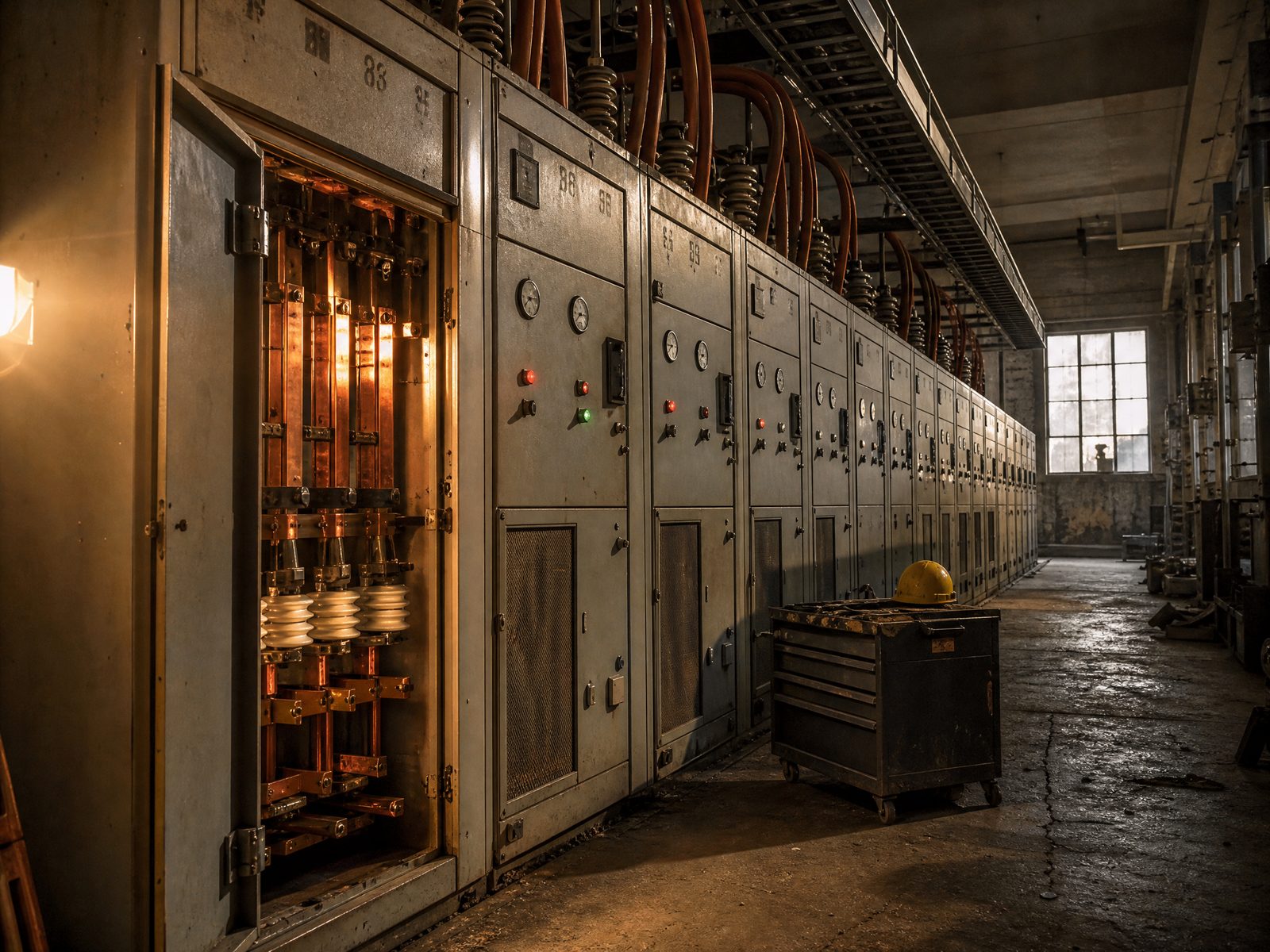
Plate 01
Why studies lead to replacement
An incident-energy analysis quantifies the hazard at each piece of equipment. Where the calculated energy demands PPE that makes routine work impractical, the usual remedies are faster protective devices, remote racking or operation, or arc-resistant construction — and on older gear the most economical path is frequently replacement rather than retrofit.
Note what that means: the equipment is being retired because of how it must be worked on, not because it has failed. Mechanically and electrically it is often sound, which puts it squarely in the resale market.
Plate 02
What typically comes out
Older air-magnetic and early vacuum switchgear line-ups, fixed-mounted breaker switchboards, MCCs without arc-resistant construction, and panelboards with slow upstream protection. Also the protective relays being replaced by modern digital units — and electromechanical relays retain a real market with utilities and industrials maintaining legacy protection.
The drawout breakers coming out of those line-ups are typically the highest-value items in the project, because the aftermarket for discontinued frames is deep.
Plate 03
Timing the sale with the project
Arc-flash projects have long lead times: study, engineering, procurement of new gear with its own lead time, then a changeover outage. Bring the equipment sale into the plan at engineering stage, because by then the equipment list is known precisely.
That lets the resale proceeds be applied against the project budget rather than showing up later as a small credit against a disposal line, and it lets the removal be sequenced into the same outage as the changeover.
Plate 04
Documentation to keep
The study itself is not something a buyer needs, but the equipment records are: nameplate data, protective device settings, and any maintenance and test history. Equipment retired from a facility with a formal electrical safety program usually has good records, and those records raise the offer.
Questions
Frequently asked
Is switchgear retired for arc-flash reasons still salable?
Usually yes. It is being replaced because of how it must be maintained, not because it failed, so it commonly retains full resale value.
What is the most valuable part of an arc-flash replacement?
Typically the drawout breakers, followed by the switchgear sections themselves and any electromechanical protective relays.
When should I involve a buyer in an arc-flash project?
At engineering stage, when the equipment list is firm. That allows proceeds to be budgeted and removal to be folded into the changeover outage.
Do you buy protective relays?
Yes, including electromechanical relays, which still serve legacy protection schemes and have a steady market.
Next
Related field notes
Upgrading a plant's electrical system without throwing away the old one
Capacity expansions, arc-flash mitigation and line consolidations all displace serviceable gear. How to recover value from equipment coming out of a working plant.
SectorsWhy obsolete circuit breakers can be the most valuable items in the room
Drawout breakers, discontinued frames and the aftermarket that keeps them valuable. How breaker offers are built and what documentation raises them.
ValuationWhat buyers look for in 5 kV and 15 kV equipment
Metal-clad switchgear, vacuum breakers and MV motor control: why the buyer pool is small, why values are high, and what documentation is effectively required.
ValuationForm 1 — Request for Offer
Get a Written Offer
Send the asset list, or just describe what is in the room. We come back the same business day with a written, itemized offer.
Faster: call or text 954-740-1983
Email an asset list to electricalequipmentbuyers@gmail.com
Mon–Sat, 7am–7pm ET. We never resell your contact information.