
Sectors
Upgrading a plant's electrical system without throwing away the old one
Plants rarely close, but they constantly change, and every change leaves serviceable electrical equipment sitting somewhere.
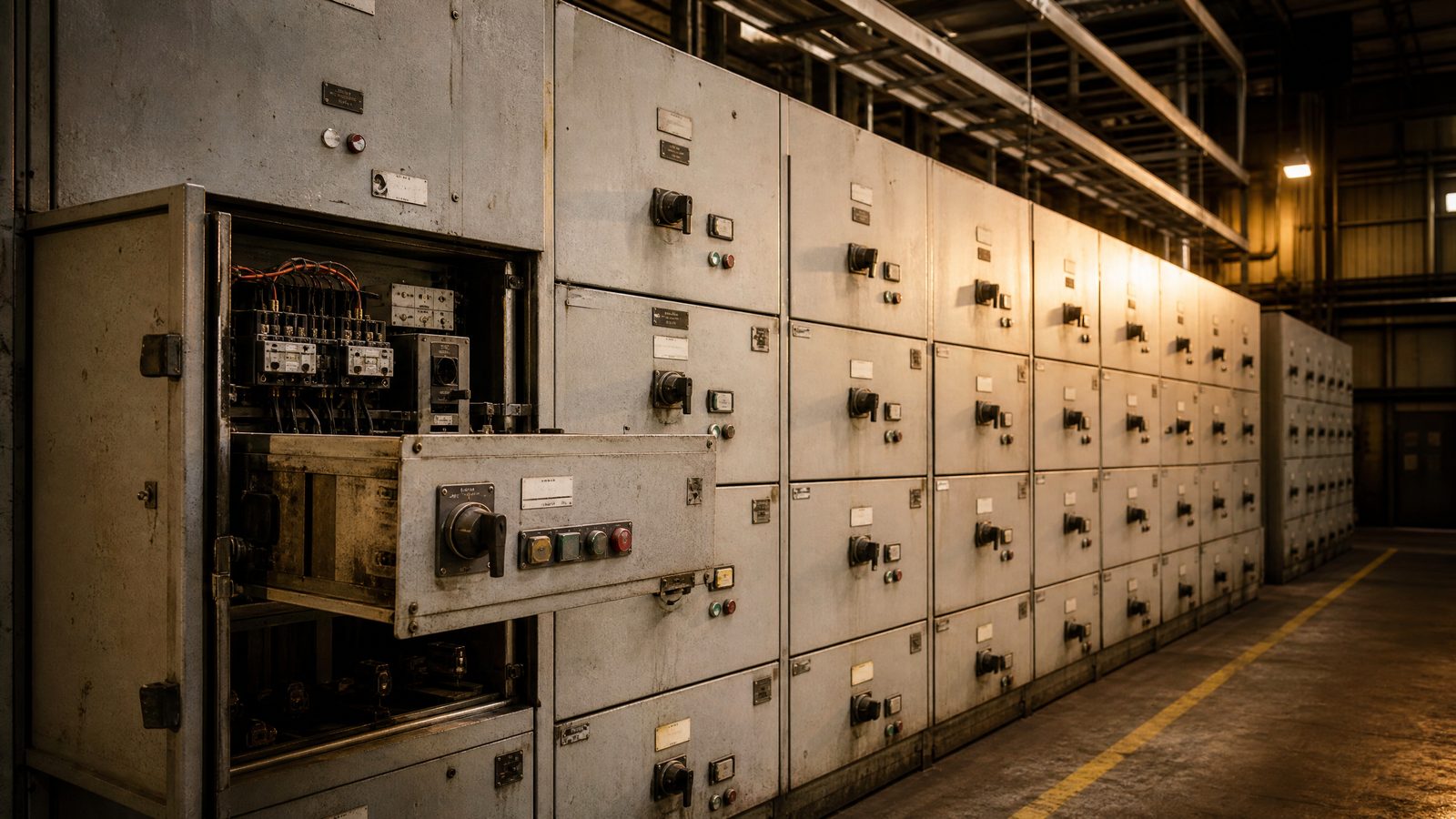
Plate 01
The four upgrades that generate surplus
Capacity expansion: a new line needs more service, so transformers and switchgear are upsized and the existing units come out working. Arc-flash mitigation: older gear is replaced with equipment offering remote racking, arc-resistant construction and modern protective relaying.
Line consolidation and automation: production equipment is retired and the MCC sections, drives and feeders that served it become surplus. And obsolescence programs: gear whose manufacturer support has ended is replaced proactively, which puts exactly the discontinued equipment other plants are desperate for onto the market.
Plate 02
The mistake: storing it indefinitely
Displaced equipment usually ends up in a corner of the warehouse or outside on a pad, on the theory that it might be useful. Two things then happen. It deteriorates — dry-type transformers absorb moisture, enclosures corrode, contacts oxidize — and its market shrinks as the installed base of compatible systems declines.
Equipment is worth the most in the month it comes out. If there is no concrete plan to reinstall it, that is the moment to price it.
Plate 03
Coordinating a sale with a live plant
Removals in operating plants happen around production. That means scheduled outage windows, hot-work permits, escort and badging requirements, and traffic paths that avoid active areas. Crews who work in plants regularly plan around all of it as a matter of course.
One practical suggestion: schedule the surplus removal to coincide with the new installation. The isolation is already in place, the area is already opened up, and one outage covers both halves of the work.
Plate 04
Value that plant staff routinely overlook
The spare parts room, which we have written about separately and which is almost always the highest-value item per pound. The bus plugs on a busway run that is being reconfigured. Drives pulled from retired lines. And feeder cable from decommissioned equipment, which is frequently large-gauge copper with a short, clean pull.
Questions
Frequently asked
Do you buy equipment from plants that are still operating?
Regularly. Most of what we purchase comes out of working facilities during upgrades rather than from closures.
Can removal be scheduled around production?
Yes. We work within outage windows, permit requirements and escort rules, and we recommend aligning surplus removal with the new installation outage.
Should I store displaced equipment as a spare?
Only if there is a concrete plan and a suitable indoor storage environment. Stored equipment deteriorates and its market shrinks over time.
Is obsolete equipment from an upgrade worth selling?
Frequently it is the most valuable thing in the project, because other facilities still running that family cannot buy it new.
Next
Related field notes
Why MCC buckets sell when the structure does not
How motor control centers are valued: starter sizes, bucket types, bus rating and drive content, plus what to photograph on a multi-section line-up.
ValuationWhy the storage shelf beats the switchgear on a value-per-pound basis
Breakers, bus plugs, MCC buckets, relays and trip units in a spares room are frequently the highest-value items in a closure. How to inventory them before they are scrapped.
ProjectsArc-flash upgrades: what comes out, and what it is worth
Why arc-flash studies lead to switchgear replacement, what the retired equipment is worth, and how to keep a safety project from becoming a disposal cost.
SectorsForm 1 — Request for Offer
Get a Written Offer
Send the asset list, or just describe what is in the room. We come back the same business day with a written, itemized offer.
Faster: call or text 954-740-1983
Email an asset list to electricalequipmentbuyers@gmail.com
Mon–Sat, 7am–7pm ET. We never resell your contact information.