
Sectors
Campus electrical projects run on a summer clock
Educational facilities do most of their electrical work in a ten-week window, and that single fact shapes everything about buying their surplus.
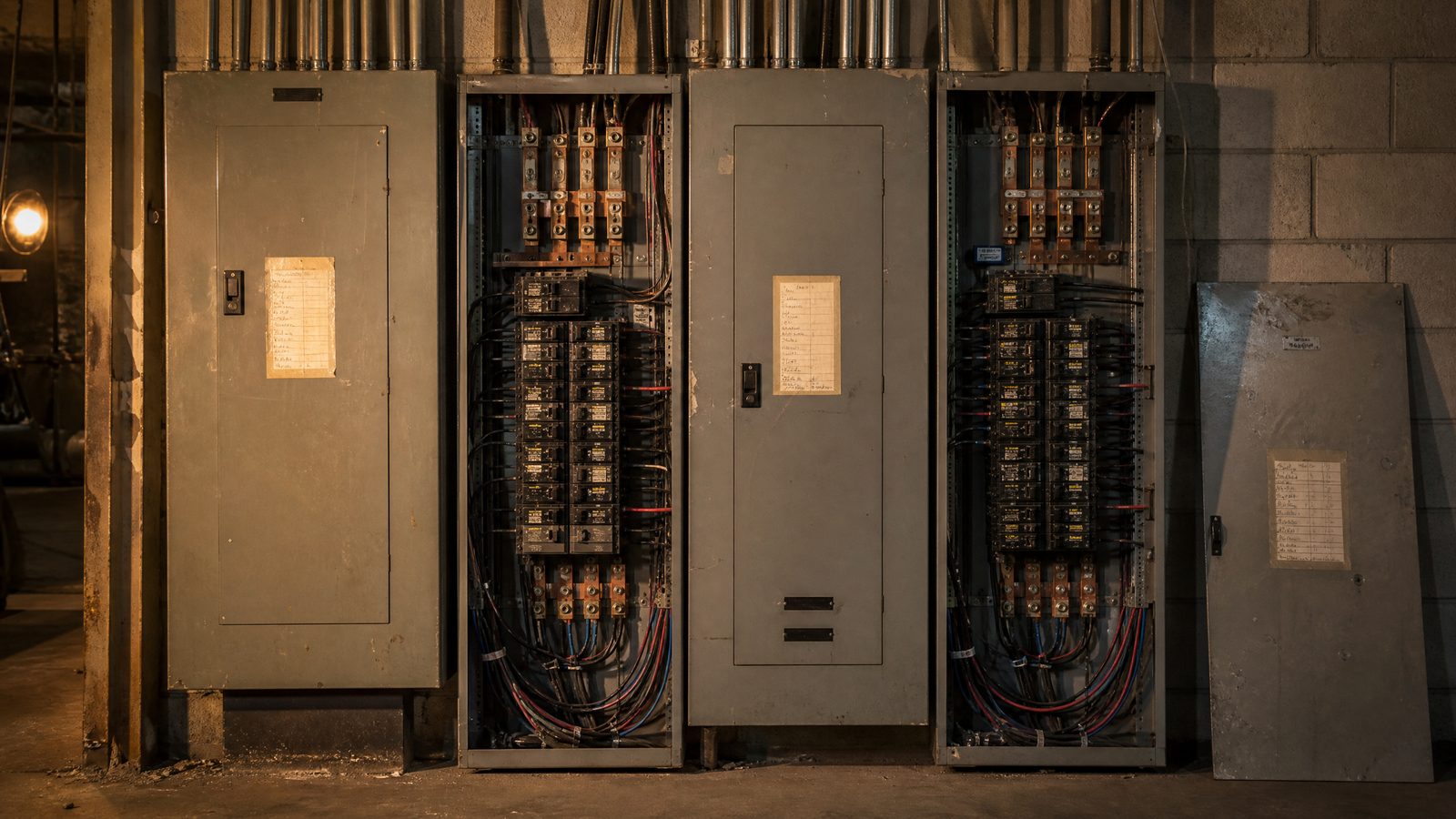
Plate 01
The calendar drives the project
Districts and universities cannot take buildings out of service during the academic year, so service upgrades, panel replacements and switchgear work concentrate into summer. Bond-funded programs compound this: a district passes a facilities bond and then executes across several summers, generating displaced equipment on a predictable rhythm.
For a seller, this means the removal window is fixed and short. Getting an offer written in spring rather than in July is the difference between a coordinated removal and equipment sitting in a corridor into September.
Plate 02
What comes out of campus work
Distribution transformers and pad-mounted units on larger campuses, switchboards and panelboards in quantity, older motor control for mechanical systems, and increasingly generators and transfer switches as districts add standby power to shelter-designated buildings.
Panelboard quantity is the notable feature. A single high school renovation can displace dozens of panels and a large volume of branch and feeder copper — individually modest, collectively significant.
Plate 03
Procurement and paperwork
Public institutions dispose of assets under policy: surplus declarations, board approvals, competitive processes and sometimes auction requirements. That is not an obstacle, but it does mean starting earlier and providing documentation a private plant would not need.
Practical advice: ask your purchasing department what disposal pathway applies before soliciting offers. A buyer who can supply W-9s, certificates of insurance, itemized offers and formal invoices without friction saves weeks here.
Plate 04
Coordinating with the general contractor
On bond work the electrical contractor or GC is often already responsible for removal, in which case the surplus value belongs to whoever the contract says it does. Read that clause before the project starts.
Districts that retain salvage rights and sell separately generally do better than districts that let equipment disappear into a demolition allowance. It is worth the one conversation.
Questions
Frequently asked
Do you buy equipment from schools and universities?
Yes — transformers, switchboards, panelboards, motor control, generators and transfer switches from renovations, service upgrades and bond programs.
Can removal happen during summer break?
That is the normal case. We plan campus removals around the summer window and coordinate with the GC and facilities staff.
Can you work within public surplus disposal rules?
Yes. We provide itemized written offers, insurance certificates, W-9s and formal invoices suitable for board and purchasing review.
Who owns the salvage on bond-funded work?
It depends on the contract. Check the salvage clause before the project begins — districts that retain salvage rights typically recover more.
Next
Related field notes
Why MCC buckets sell when the structure does not
How motor control centers are valued: starter sizes, bucket types, bus rating and drive content, plus what to photograph on a multi-section line-up.
ValuationSorting electrical wire and cable before you sell it
MV shielded cable, copper feeders, tray and control wire: which categories carry reuse value, which are pure recovery, and how removal cost decides the rest.
ValuationWhat happens on site, hour by hour
From lockout coordination to the last sweep: the real sequence of an industrial electrical equipment removal, and where schedules usually slip.
ProcessForm 1 — Request for Offer
Get a Written Offer
Send the asset list, or just describe what is in the room. We come back the same business day with a written, itemized offer.
Faster: call or text 954-740-1983
Email an asset list to electricalequipmentbuyers@gmail.com
Mon–Sat, 7am–7pm ET. We never resell your contact information.