
Sectors
Selling hospital electrical equipment without touching life safety
Hospitals generate excellent used electrical equipment and the hardest removal conditions in the industry.
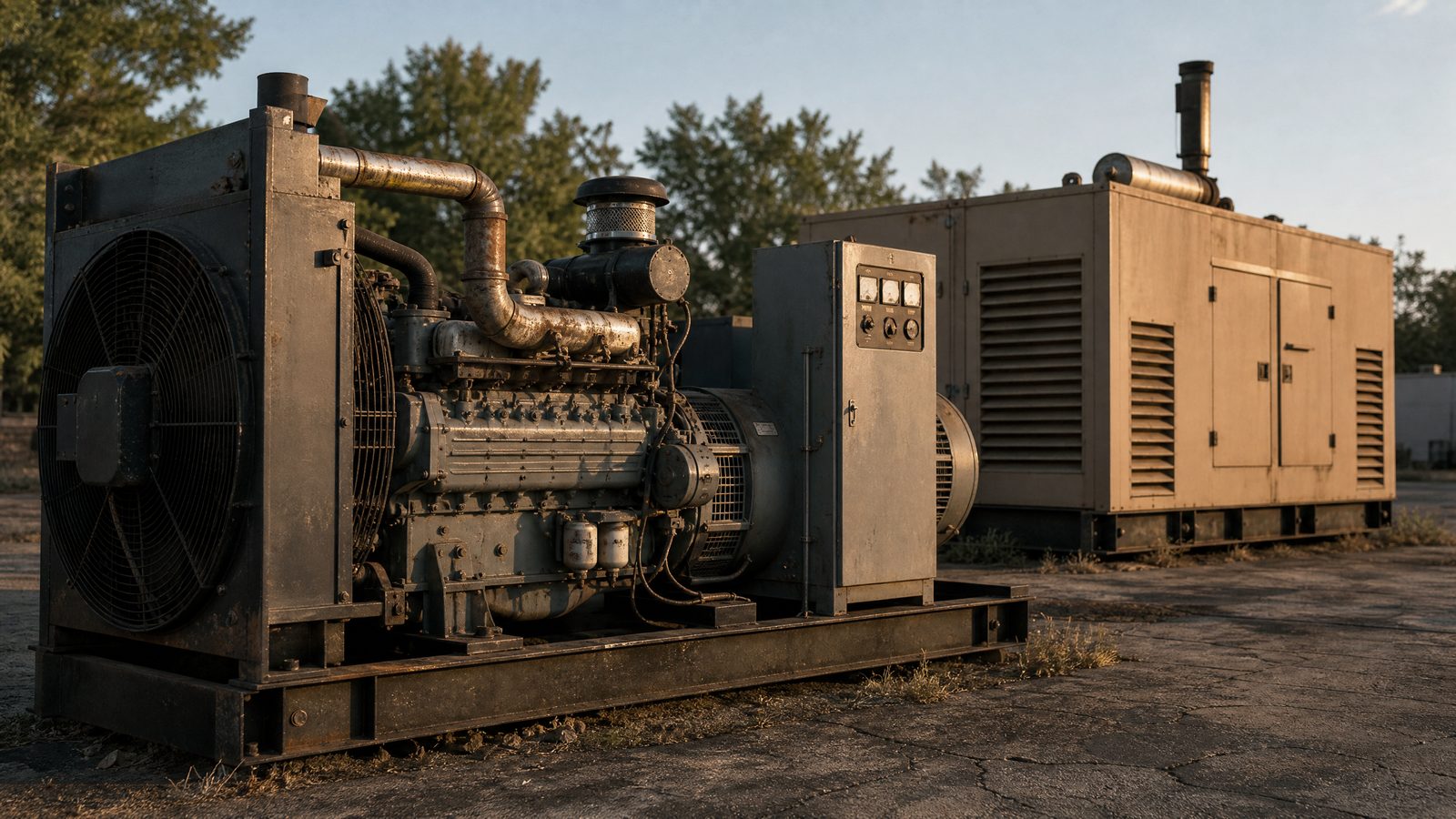
Plate 01
Why healthcare surplus is high quality
Essential electrical systems in hospitals are tested and maintained under regulatory requirements: monthly generator testing, documented transfer switch exercising, annual maintenance. Equipment retired from that regime is well documented and mechanically sound.
Replacement is typically driven by capacity growth, code updates, renovation or age policy rather than failure — so generators, transfer switches, switchgear and distribution transformers come out in genuinely good condition.
Plate 02
The constraints that shape the work
Essential systems cannot be interrupted, so removals happen behind temporary provisions or after new equipment is commissioned and proven. Infection control governs dust, containment and routing, particularly near patient care areas. Noise and vibration are restricted. Travel paths are frequently limited to specific corridors and hours.
The consequence is that the physical work is a small fraction of the project duration. Crews need to accept that and to plan for containment, off-hours work and interim staging.
Plate 03
What typically becomes available
Emergency and standby generators with their paralleling gear, automatic transfer switches in quantity, essential and normal branch switchboards, distribution transformers, isolated power panels from older operating room installations, and substantial copper feeder cable during renovations.
ATSs deserve particular mention: hospitals accumulate many of them, they are compact, they ship easily, and there is steady demand from facilities and contractors.
Plate 04
Documentation to gather
Generator test logs, transfer switch exercise records, maintenance contracts and any commissioning documentation from original installation. Healthcare facilities generally have these because they are required to, and they translate directly into higher offers.
Coordinate early with facilities engineering and the compliance group. Equipment removal in a hospital touches more stakeholders than in any other setting, and the sale goes smoothly exactly when those stakeholders were included from the start.
Questions
Frequently asked
Do you buy hospital electrical equipment?
Yes — emergency generators, automatic transfer switches, essential and normal branch switchboards, distribution transformers and isolated power equipment.
Can removals happen without interrupting essential systems?
Yes. Work is sequenced after new equipment is commissioned or behind temporary provisions, with infection control and corridor restrictions respected.
Are hospital transfer switches worth selling?
Frequently yes. ATSs are compact, ship easily and have steady demand, and hospitals typically have many of them.
What documentation should we collect?
Generator test logs, transfer switch exercise records, maintenance history and original commissioning documents. All of it raises the offer.
Next
Related field notes
What a used diesel generator is worth, and why hours mislead
How generator offers are built: kW rating, engine family, hours, enclosure, switchgear and whether the set runs. What to send for a written offer.
ValuationWhy data centers generate the best used electrical equipment
UPS replacements, PDU refreshes, generator upgrades and decommissioned halls. Why data center surplus is unusually high-quality and how it is priced.
SectorsHow test reports change what used equipment is worth
Insulation resistance, contact resistance, DGA, breaker timing and thermographic surveys — which reports matter to buyers and when testing before sale pays for itself.
ProcessForm 1 — Request for Offer
Get a Written Offer
Send the asset list, or just describe what is in the room. We come back the same business day with a written, itemized offer.
Faster: call or text 954-740-1983
Email an asset list to electricalequipmentbuyers@gmail.com
Mon–Sat, 7am–7pm ET. We never resell your contact information.